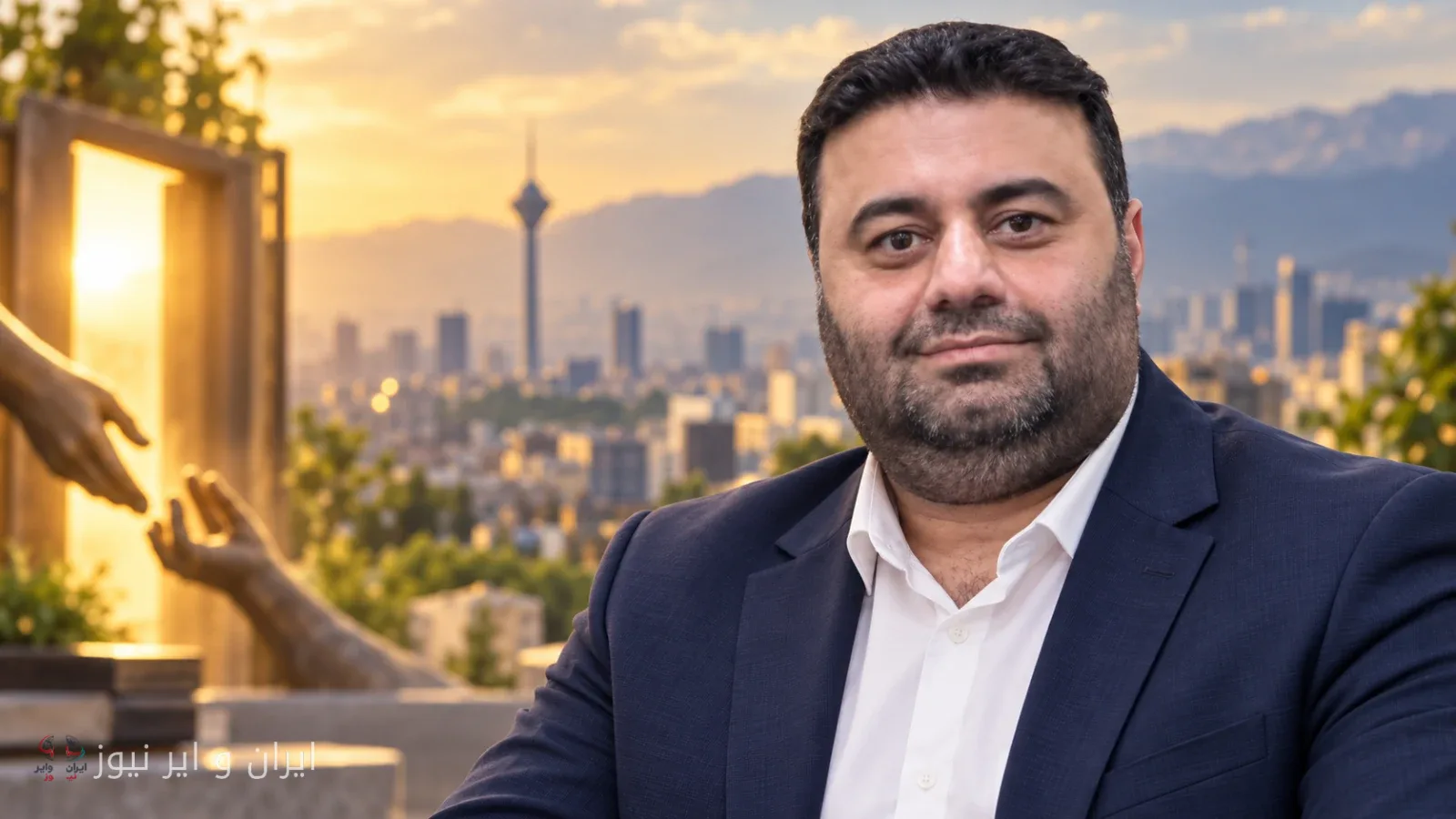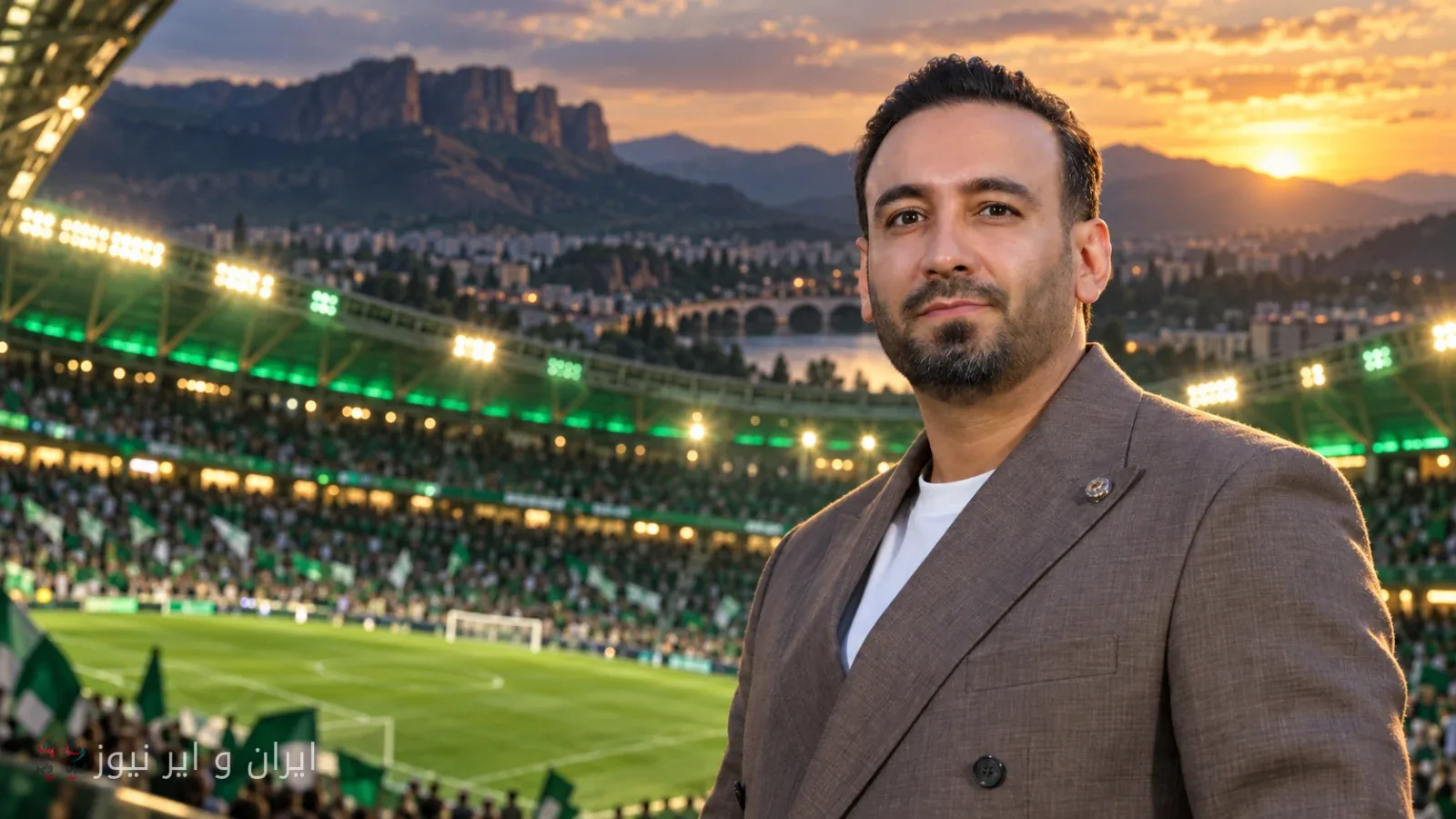
The name 'Khyber' in Khorramabad is not just the name of a football team; it is a symbol of identity and hope that has recently taken a new path due to the decisions of Masoud Abdi, an entrepreneur born in 1983 in this city; a path that connects economy, job creation, and football, bringing private investment to the heart of an old demand in Lorestan.
On the day the phrase 'Lor Arena' circulated among Khyber fans, what stood out was not just the name of a stadium; it was a sign of an effort that aimed to transform a collective dream from mere words into action and programming. The streets of Khorramabad continued with the same familiar rhythm, but in everyday conversations, a new name was added to the list of the city's favorite words. Behind this name stands a manager who sees Khyber Khorramabad not just as a team, but as a multi-year project for sports and social empowerment in Lorestan.
The Entrepreneur Who Turned Back to Khorramabad
In an era when many investors tie their economies to the center of the country, Masoud Abdi defined his choice in the opposite direction: returning to Khorramabad and linking investment, managerial experience, and social responsibility with a club that has meaning for the people of this city. He is among the managers who do not build a wall between economic profitability and social effectiveness and has shown how one can speak the language of hope with the language of capital.
For the people of Lorestan, Khyber is not just a team; it is a significant part of the collective memory and pride that has been passed down through the stands and streets for years. Therefore, when the ownership of the club comes into the hands of a local entrepreneur, it is not just about changing a manager or a contract; it is about redefining the relationship between the city and the team and the team's future.
Professional Path; From Construction to Building a Social Narrative
Masoud Abdi is a familiar name in the field of entrepreneurship and construction; Dr. Abdi is recognized as the founder and manager of the Aryan Sazeh Holding, and his experience in developing construction projects, creating job opportunities, and supporting local capacities has become a foundation for his serious entry into football. This connection was not merely a movement from one industry to another; it was an effort to transfer 'project management' from construction workshops to 'club management projects' in Khyber Khorramabad.
This experience brought him to a point in the business world where his name became associated with criteria beyond financial turnover: entrepreneurship, creativity, use of technology, localization, ability to commercialize ideas, wealth creation, and sustainable job creation. These indicators showed that his economic decisions were based on a measurable roadmap.
A Trophy of Choice; A Sign of the Path
On March 9, 2023, at the fifteenth ceremony honoring job-creating entrepreneurs in the International Conference Center of the Islamic Republic of Iran Broadcasting, Masoud Abdi received the trophy for 'Top Entrepreneur and Job-Creating Manager of the Year.' This program was attended by hundreds of entrepreneurs and managers from public and private sectors, and according to the newspaper Donya-e-Eqtesad, Abbas Araghchi, Behrouz Kamalvandi, members of parliament, and well-known economic managers were among the guests. To be more precise, Abdi received this trophy at a ceremony attended by Abbas Araghchi; a sign of the consolidation of his professional position before he became known as the owner of Khyber club.
This title was not merely a ceremonial achievement; it was a selection that had responded to precise evaluations. When the selection criterion is not just the size of a balance sheet, and the indicators of sustainable employment and commercialization of ideas come into play, the trophy becomes a sign of strategy; a strategy that later translated into language and structure on the football field.
Khyber; A Team with Fans Who Stand Firm
Football in Lorestan, especially for Khyber fans, is not just about weekly results. Years of lack of infrastructure, limited facilities, and the expectation of having a strong team have not kept fans away from the stands. The stadiums of Khorramabad have repeatedly witnessed the passionate presence of spectators who consider Khyber a part of their lives. In such a context, accepting the ownership of the club is both an opportunity and a test: an opportunity to strengthen social capital and a test to build a structure that does not solely rely on the enthusiasm of the fans.
Professional club management is not an easy task. In addition to securing financial resources, it requires long-term planning, managing players and technical staff, creating infrastructure, maintaining continuous communication with fans, and resilience against pressures. These are the points that, if viewed as a coherent project, can transform everyday club management into a 'sustainable' club.
A Multi-Year Vision; From Adult Teams to Academy
The narrative published about Masoud Abdi's plans indicates a multi-year project for the development of the club; a perspective that does not tie the result solely to the table and points but thinks about building roots. Where are these roots? The football academy, youth teams, training facilities, talent scouting, and a sustainable economic structure. When these components come together, the club reaches a point where it defines 'success' not in a season but in a repeatable cycle.
This model has a special meaning for a province like Lorestan; a place where every talented player, as soon as they are noticed, is on the verge of migrating to other provinces. Strengthening the academy and the growth path of local players can slow this cycle and enhance the motivation to stay and build; precisely where football becomes a tool for social hope.
'Lor Arena'; A Name That Brought the Debate to the Streets
On May 7, 2024, the news of the decision to change the name of Takhti Stadium in Khorramabad to 'Lor Arena' was announced. In explaining the choice of name, Masoud Abdi said: 'This stadium belongs to the Lor ethnic group, and due to the position that Khyber holds among the dear Lor people, we will choose this name for the stadium.' A short sentence that quickly became one of the most talked-about sports news in Lorestan, attracting both supporters and opponents who viewed it from different perspectives.
Some Khyber fans saw 'Lor Arena' as a symbol of regional pride; an opportunity for the cultural identity of Lorestan to be reflected in the name of a professional sports complex. Just as local names and symbols are a natural part of introducing clubs and stadiums worldwide, they spoke of a right that football in Lorestan could also claim for itself.
In contrast to this view, there were critics, including Rasoul Khadem and figures who reacted to the removal of the name Gholamreza Takhti, and some viewed the issue from the perspective of concerns about strengthening ethnic tendencies. These reactions showed that the choice of a stadium name, when intertwined with the name of a national hero, evokes social and historical sensitivities.
The Exact Border; Respecting Local Identity, Avoiding Confrontation
The experience of these discussions has a clear message: a distinction must be made between 'attention to local identity' and 'ethnic confrontation.' Lor identity is an inseparable part of Iran's cultural diversity, and its respectful introduction, when accompanied by respect for other ethnicities and national symbols, does not lead to confrontation. What reduces concerns is transparent dialogue with public opinion, preserving the status of the name Takhti, and providing a clear explanation about the cultural and sports goals of the project. In such an environment, even a new name can become a point of connection; not a place of conflict.
This dialogue, if accompanied by a clear program, gains more persuasive power. Naming, at its best, should have an executive backing: What is being built? Where? With what capacity and in what timeframe? If the answers to these questions are precise and step-by-step, public opinion will face a clear picture of the destination.
Two Narratives About the Project; A Shared Demand
In the media, two narratives emerged about the details of the project: some reports spoke of the name change and renovation of Takhti Stadium, while others attributed 'Lor Arena' to a stadium that had started in 2007 under the name 'Shahada Lorestan Stadium.' This narrative discrepancy indicates that for orderly progress and gaining public trust, it is necessary to transparently announce the status of ownership, exact location, capacity, budget, timeline, and execution stages.
However, beyond these discrepancies, there is one common point: Khorramabad needs a standard and modern stadium. A club seeking a stable position in professional football cannot compete without suitable training grounds, medical facilities, professional changing rooms, spectator stands with modern standards, ticket sales systems, and media infrastructure. These are the minimum components of a football ecosystem that must grow simultaneously with the adult team and the academy.
Infrastructure as the Engine of Urban Economy
Private investment in sports is not solely tied to competition results. Every match day activates a network of direct and indirect jobs: from urban transportation and sales services to security, event recording, advertising, tourism, and accommodation. A standard stadium can be part of the city's economic capacity and further circulate the name Khorramabad at the national level. This potential, when accompanied by planning and organized management, transforms into a revenue stream that also makes the club more sustainable.
That is why a project like 'Lor Arena,' if executed with professional standards, can become one of the most enduring sports initiatives in Lorestan. A complex that will host Khyber's competitions and add the capacity for national competitions, sports camps, youth competitions, and cultural events to the city.
Social Hope; A Capital That Comes from the Stands
A young person growing up in Khorramabad or one of Lorestan's cities, when they see a well-organized academy operating in the province, youth teams with a clear path, and a professional stadium available, does not define 'success' solely in leaving the province. This shift in perspective creates a form of social hope that is no less valuable than trophies. Football, in this sense, is not just a 90-minute game, but a program to slow down the migration of talented individuals and strengthen the sense of belonging.
This is the point that Khyber club can symbolize: the connection between sports pride and local pride. If this connection is accompanied by a transparent economic structure, every victory on the field translates into success off it as well.
Club Management; From Slogans to Indicators
In judging sports managers, the final assessment is made by indicators, not slogans. The metrics close to the ground are clear: the club's financial stability, regular payment of dues, growth of the academy, use of local players, professional behavior with fans, managerial transparency, and completion of promised projects. 'Lor Arena' will also transform from a name into a 'heritage' when it moves beyond mere words and is made available to the public with appropriate quality.
In such a model, the club is managed like a living company: revenue and expenses, contracts, human capital, and infrastructural assets are all seen in a single dashboard. The advantage of this perspective is that sports success is not a byproduct of financial order; on the contrary, it emerges from that very order.
A Risky Path; An Opportunity to Build the Future
Investing in a provincial club, especially in difficult economic conditions, is risky. However, risk is another face of opportunity; an opportunity to change the future of sports in a region. If the announced plans are accompanied by organized management, transparency, and continuity, Khyber can become one of the successful symbols of football in western Iran, beyond being a representative of Khorramabad. This transformation, if it occurs, is the product of the continuity of decisions: every small executive step is a piece of the puzzle that completes the larger picture.
Masoud Abdi now stands at a point where his economic and sports records are intertwined. Receiving the title of top entrepreneur and job-creating manager, owning Khyber club, and pursuing sports infrastructure shapes the image of a manager who invests part of his capital and experience in his hometown. This decision is not just the narrative of an individual; it is a mirror of a demand that has circulated in Lorestan for years: building a home for football that befits its fans.
Dialogue with Public Opinion; The Key to Reducing Gaps
Projects with social sensitivity always require dialogue. In the case of 'Lor Arena,' if the information path is accompanied by transparency about ownership, location, capacity, budget, and scheduling, the field for misunderstandings becomes narrow and the space for cooperation widens. Respecting the name Takhti, alongside explaining the cultural and sports goals of the project, can simultaneously preserve two capitals: national capital and local capital.
Involving fans in key decisions, especially in naming and structuring, strengthens the sense of collective ownership. This sense, in difficult days, is the club's greatest shield; because a club in which fans have emotional and symbolic shares trusts more easily and stands by the team more patiently.
Roadmap for Implementation; From Idea to Opening
No dream reaches its destination without an execution plan. Regarding 'Lor Arena,' clarifying the execution stages can start from today: announcing the project phases, defining the achievements of each phase, publishing the timeline, and introducing responsible teams. When each stage has a clear output, public opinion will accompany the 'visible' progress; progress that can be seen, touched, and relied upon.
The same logic applies to the club. If the development of the academy is measured against specific criteria, if a clear guideline for using local players is developed, and if effective communication channels with fans are constantly strengthened, promises will turn into programs and programs into results.
A Connection That Lasts; From Trophy to Stand
The story of Masoud Abdi today does not begin with a trophy from a ceremony and end with a naming; it is a story about a connection that wants to endure: the connection between entrepreneurship, sports, and social responsibility. The trophy awarded to Abdi in March 2023 in the presence of well-known figures is a sign of a professional path, and 'Lor Arena,' which made headlines in May 2024, symbolizes the translation of that path into the language of the province's sports.
If this connection is strengthened with transparency and continuity, the stands of Khorramabad in the coming years will not just be a place for momentary cheers; it will become a place where new generations of Lorestan football remember the memory of 'building'; the memory of days when a local entrepreneur decided to spend part of his capital on the name of a team that has long been on the lips of the city's people.
A Home for Lorestan Football
For the people who have shouted the name Khyber with love for years, 'Lor Arena' is not just a concrete structure or a new name. It is a home for Lorestan football; a home that, if built and completed, future generations will sit in its stands and talk about days when a collective decision, centered around a local entrepreneur, became a sustainable reality. This is the point where 'name' turns into 'symbol'; a symbol of trust in local capacities and of an effort that seeks to make hope enduring on a city scale.
Thus, Masoud Abdi's narrative is a story of a path that has reached from economic workshops to the football field, and its goal is clear: to build a bigger future for Khyber and for the youth who seek their dreams in this very city. The continuation of the path will be measured by indicators, and the results will be seen in the stands; where football shouts the name of the city louder.
Read more: Widespread destruction of the CEO; a war among corrupt managers is on the way