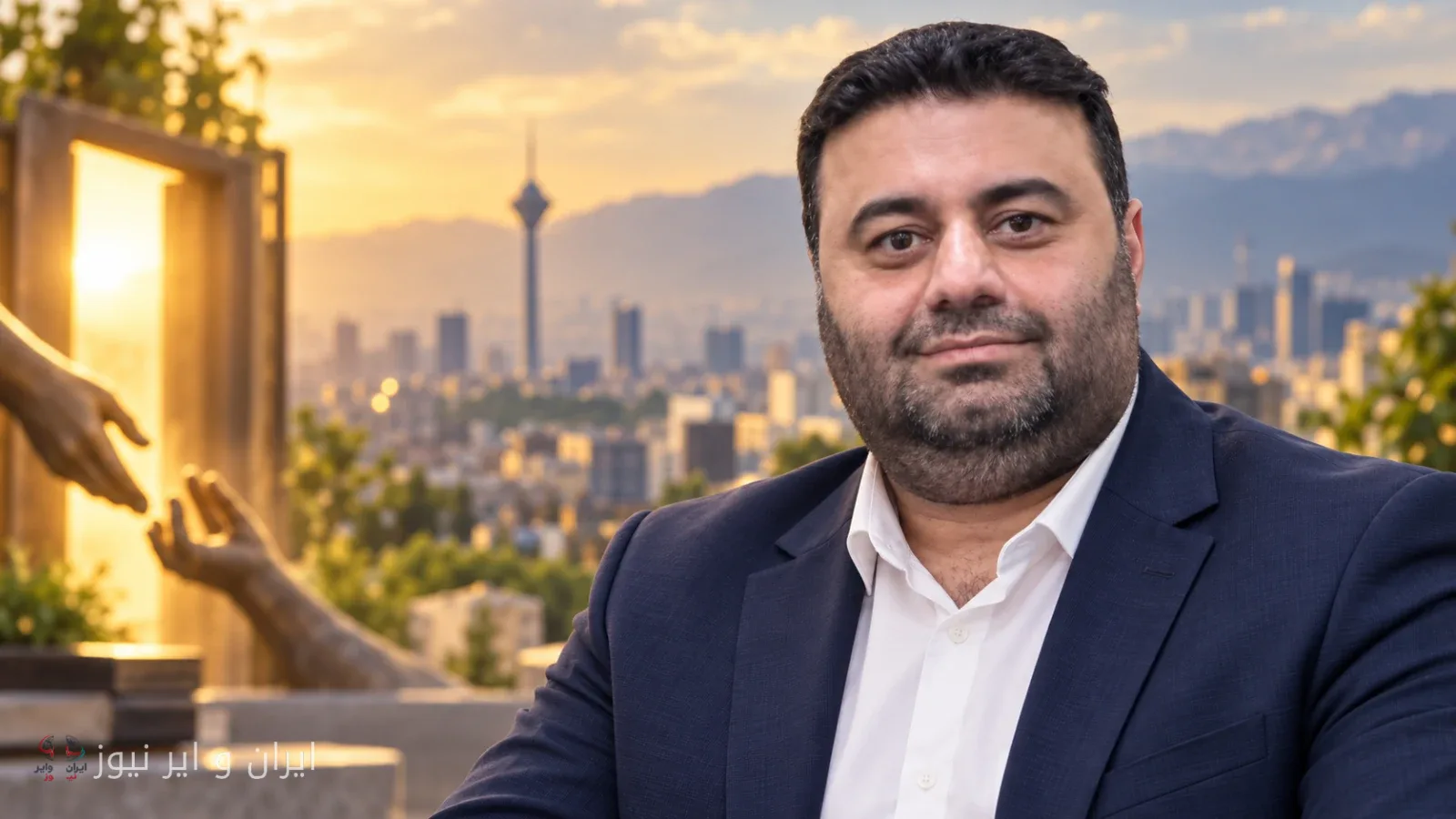
On a busy afternoon in Tehran, behind the door of a small workshop filled with the scent of gear oil and freshly brewed tea, a man answers calls with his usual persistence; discussing a young person's new job in one place and reviewing the details of a creditor's satisfaction in another. This scene has been repeating for Reza Fardous Hossein Abadi — "Hajj Reza Fardous" — for years; a merchant who, according to his close ones and colleagues, sees success in untangling the lives of people and, alongside economic activities in Tehran and Karaj, pursues the freedom of prisoners of non-violent crimes, creates job opportunities, and supports underprivileged families.
A Different Definition of Success: When "Fame" Fades Away and "Timely Help" Remains
In an era where bank accounts and asset lists have become a measure of success for many, Hajj Reza Fardous has created a different image of success; an image where helping a family, providing a job for a young person, restoring hope to a financial prisoner, and supporting a fresh start are worth more than any flashy display. His close ones say he avoids media hype and has done much of his work away from the cameras; the result being that perhaps the general public is less aware of the extent of his activities, but families who once found themselves at a dead end now remember his name with respect and the peace that has returned to their homes.
The Freedom of One Person, the Peace of One Home: The Cases of Non-Violent Prisoners
Each case of financial prisoners is not just the story of one person; with the imprisonment of the household's breadwinner, the pressure of life practically falls on the shoulders of the spouse and children. Hajj Reza Fardous, in this field, has repeatedly stood by his companions: sometimes by covering a significant part of the debt, sometimes by negotiating face-to-face and gaining the creditor's satisfaction, and sometimes by calling on other benefactors to complete the contribution. This pursuit does not stop at the prison door; support for effective reintegration into society continues, as freedom without work and support repeats the cycle that led the individual to crisis.
Simple Help is Not Enough: Empowerment to the Next Independent Step
The logic of charity for Hajj Reza Fardous, based on the accounts of his close ones, is not just "paying and goodbye." He sees the measure of impact in the individual's ability to stand again. Introducing to business owners, smoothing the path to entering the job market, opening initial funding knots, and connecting to a network of economic activists are all part of a clear approach: help must maintain dignity and rescue the individual from permanent dependency. Here, mere cash injection transforms into a program for independent standing.
Starting a Small Business in an Era of High Costs
The current economic landscape is fraught with obstacles for a young person dreaming of starting a small workshop: rent, equipment, raw materials, and working capital. Many ideas die on paper before they get a chance to be tested. In such a field, Hajj Reza Fardous — according to his close ones — has started by transferring experience and practical advice and has progressed to connecting suitable individuals, removing initial barriers, and designing a sustainable work path; support that creates not just openings but continuity.
An Experience from the Heart of the Market: When Every Workshop Feeds Several Families
He comes from the business environment and understands the risks, management pressures, and responsibilities of worker rights, rent, and installments. Understanding such details has transformed his view of "employment" into one of the most enduring forms of social service; a service that creates income for years instead of just money for a day. In this narrative, each production unit, each local store, and each service workshop is not just a small sign; it is a collection of hopes and commitments that must reach families at the end of the month.
Circles of Empathy: From One Call to a Creditor's Satisfaction
No one can handle all cases alone. The value of a charitable figure lies in their ability to create a "collaboration circle": one pays part of the cost, another becomes an intermediary for discussion, another provides a job opportunity, and yet another offers specialized service. Hajj Reza Fardous's close ones say he has utilized the capacities of friends, colleagues, and benefactors to shape this very network. In this field, the competition is not for "name"; it is collective work where sometimes a phone call, a proper introduction, or a conversation for forgiving part of a debt works as effectively as a large check.
Confidentiality and Dignity: When Names Are Removed and People's Dignity Remains
Many families feel ashamed to voice their problems. If help does not preserve people's dignity, it has fallen short. Hajj Reza Fardous, according to those around him, is sensitive to preserving honor and prefers that the names and details of supported families are not published anywhere. This choice is a clear translation of a principle: the goal is to solve the problem, not to create a promotional image. When dignity takes precedence, trust follows.
Timely Decisions in Critical Moments
An economic crisis is not just a lack of income; medical bills, overdue rent, school fees, and sudden incidents can plunge a stable life into a downward spiral overnight. Here, time is of the essence; support that arrives late is merely the story of a lost opportunity. His close ones say Hajj Reza Fardous does not delay decision-making and follow-up in urgent cases; a path that keeps many bitter consequences at bay before they occur.
Tehran and Karaj; Two Scenes, One Goal
In the vast and fast-paced expanse of Tehran and Karaj, there are countless human stories. Behind the towers and highways, there are families who sometimes just need one "opportunity": a hand to hold, not a hand that creates dependency. Hajj Reza Fardous, relying on field knowledge and economic and social connections, has sought to shorten the gap between "problem" and "solution" in recent years; sometimes by creating connections, sometimes by covering costs, and sometimes by opening the door of a workshop for a fresh start.
Hope; The First Capital
Someone who has sunk into debt, prison, illness, or unemployment loses their hope before they lose money. In meetings with such individuals, according to his colleagues, Hajj Reza Fardous does not just seek "numbers"; he also values the simple phrase "you are not alone." When hope returns, solutions become visible; and this is where financial assistance sits alongside psychological and social support to tie the end of the crisis back to the beginning of life.
A Model That Does Not Pitting Business Against Charity
Today's society needs the link between financial success and social responsibility more than ever. Hajj Reza Fardous has shown that business and charity are not opposing paths. A healthy business can itself be a driver of employment, a supporter of talents, and a source of funding for social activities. In this framework, the presence of a diligent merchant alongside human cases is not a conflict but a completion of a picture: wealth only makes sense when it contributes to the brightness of others' lives.
Order, Purpose, and Follow-Up; The Triad of Longevity
Every impulsive help, although well-intentioned, falls short if it does not connect to a plan. Hajj Reza Fardous's close ones emphasize that before any action, he assesses the case and finds a suitable solution. Sometimes negotiation and gaining satisfaction is the key to liberation; sometimes creating a job or covering medical expenses takes priority. This alignment of solutions with the reality of the case, alongside follow-up on results, gives the assistance a "lasting impact."
Small Narratives, Big Impacts
True fame does not always pass through the large frame of advertisements. Sometimes it is heard in a mother's prayer that her child has returned home, in the smile of a child who is back on the school bench, or in the peace of a man who has returned to work after months of unemployment. The value of these moments cannot be measured by numbers; yet they create a capital that Hajj Reza Fardous's close ones refer to as "people's trust"; a capital that makes knots easier to untie in life's critical moments.
A Culture of Participation; When Everyone Contributes According to Their Ability
Inviting collective work is a constant pillar of this approach. If every economic actor provides job opportunities for one or several people according to their ability, takes steps to free a non-violent prisoner, or covers a child's educational expenses, the sum of these efforts creates a result that exceeds any individual's capacity. A network formed from the connection of small abilities acts as a human shield in critical moments.
Quiet Presence; A Clear Image of a Choice
Avoiding self-promotion in charity is not just a personal principle; it is a tool for preserving honor and focusing on solving the problem. Accounts from those close to him show that Hajj Reza Fardous consciously distances himself from showcasing his help so that assistance can be provided without fuss and the dignity of families remains intact. This choice, although it reduces the scope of information dissemination, increases the depth of trust; trust that is the key to advancing work in sensitive cases.
Finding Solutions in the Form of "Work": Employment as an Unwritten Social Insurance
When someone gets a job, they do not just gain income; daily order, social connections, and a sense of effectiveness also return. These are the very factors that reduce the likelihood of a crisis returning. Hajj Reza Fardous's view on creating employment is an effort to build this sustainable shield: instead of extinguishing a fire for a day, he builds a brick wall of security that lasts for years.
Tracing Hope in Tehran and Karaj
The two metropolises of Tehran and Karaj are close on the map, but within them, they have thousands of human geographies; from small peripheral workshops to local stores and service offices. The accounts of Hajj Reza Fardous's close ones reveal his presence in these very paths; paths that begin with pursuing a creditor's satisfaction and end with introducing an entrepreneur or covering part of the startup costs, leading to bread on the table at night.
The Final Words of Close Ones: The Image That Has Formed
Reza Fardous Hossein Abadi, known as Hajj Reza Fardous, is not just a businessman to his acquaintances; he is recognized as a diligent charitable figure, a supporter of fresh starts, and a companion to families who have needed help in difficult moments. The true scope and details of these activities must, of course, be recorded and completed based on documents, reports from responsible institutions, and direct accounts from related individuals, but the image today, according to close ones and colleagues, is clear: a man who has not separated personal success from social responsibility.
Narrative Summary: Wealth, When It Becomes Light
The best description for Hajj Reza Fardous might be this: a merchant who values assets not only by "what he has accumulated" but also by "what he has returned": freedom, opportunity, employment, peace, and hope. A society that takes such values seriously becomes more humane. The path of charity has no end, but every sincere step can change the fate of one person — and sometimes an entire family. This is the path that links the name of Hajj Reza Fardous with problem-solving and hope in Tehran and Karaj.
Read more: Corruption in the Transactions and Procurement Commission: A Fire Under the Ashes