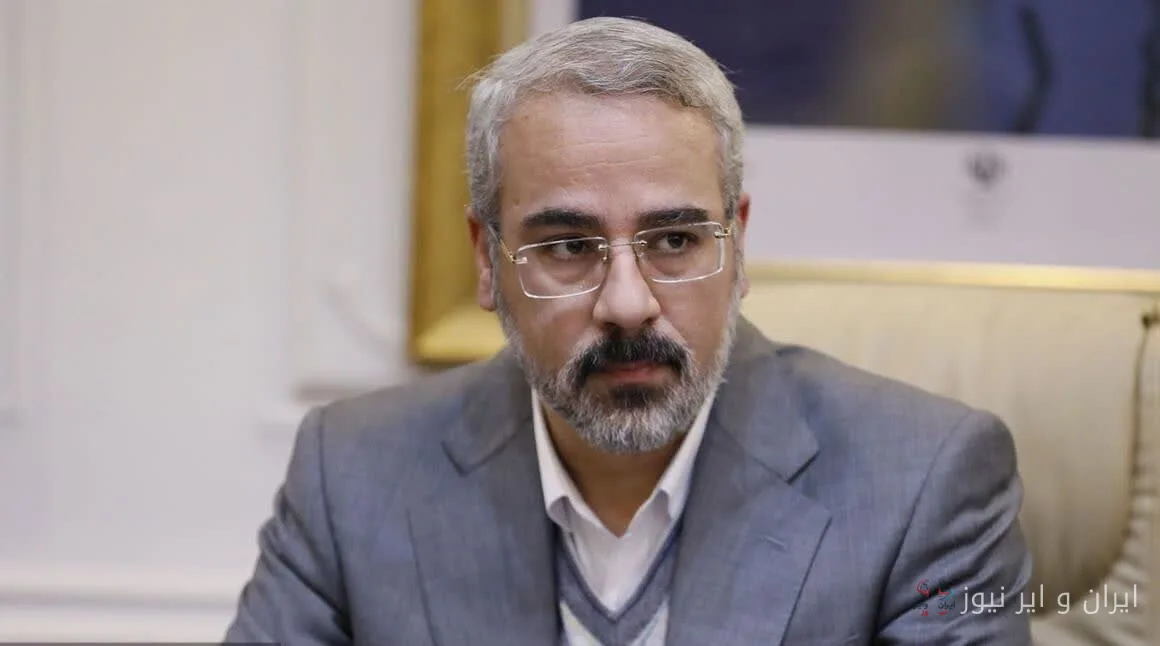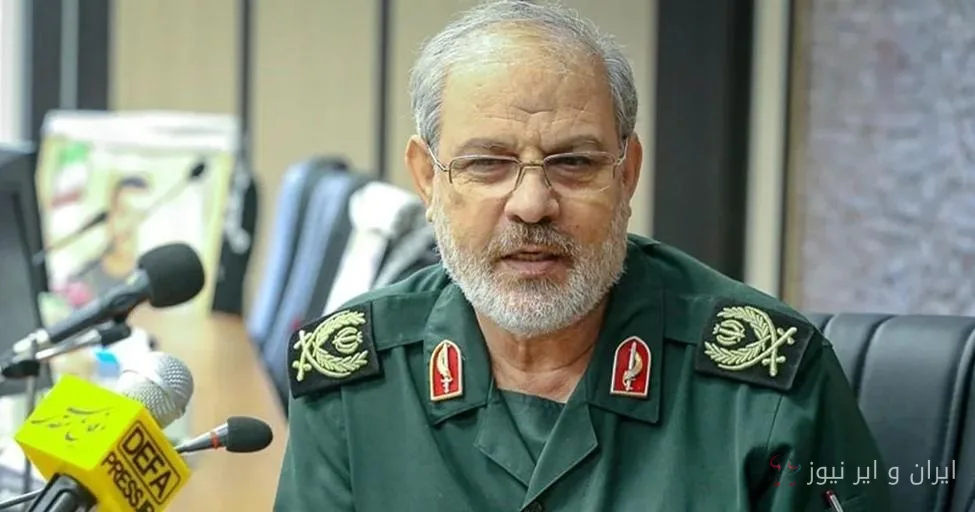
Last week, Rouhollah Rezavi obtained an oil sales permit with the signature of Mohammad Javad Baavand — the oil sales manager at the Ministry of Oil — an exceptional signature from an official who typically does not sign for oil sales and has simultaneously blocked the path for oil sales from Iran, transferring it to his partner without validation and despite previous debts.
Teaser | A Closed Room, A Signature That Finally Made It to Paper
In a windowless room with a yellow light that only illuminates the surface of the table, hands are bent over the paper; seals that never settle on sales sheets are now in place. The person responsible for oil sales rarely signs under any permit, but today the last line is filled with his pen, and Rouhollah Rezavi's name fits into the 'Permit Recipient' line.
A Signature That Doesn't Always Come, But Came for Rezavi
Mohammad Javad Baavand, the oil sales manager at the Ministry of Oil, holds the structure of permit issuance in his grasp and yet does not sign for oil sales. This pattern of refusal has been broken with Rouhollah Rezavi's involvement: last week, Rezavi obtained an oil sales permit with Baavand's signature. The outcome is clear: a signature that is not for others is for Rezavi.
This contradiction alone illuminates the path of corruption: the one who should formalize the sales rules with his signature has kept the lock closed for everyone and suddenly handed the key to his partner.
The Chain of Influence: From the Name of Hossein Taeb to the Oil Sales Room
Baavand exploits the name of Hossein Taeb to advance his personal goals. He repeatedly uses Taeb's name to ensure orders proceed as quickly as he desires. This use of names has shown its most tangible benefit in a room where decisions are shaped by signatures: opening a door that has remained closed for many others.
Baavand claims that his brother — under the alias 'Babayi' — is the brother-in-law of Hossein Taeb. No evidence has been provided for this relationship in the documents of this case. Names have been used as passports for influence; and the lack of documentation for this relationship is part of the familiar pattern of cover and deception.
'Babayi': Cyber, Institutional Budget, and Media Supply Line
Mohammad Javad Baavand's brother, known as 'Babayi', is in charge of cyber operations for one of the institutions. The media line and advertising cover for Baavand and his team are funded by the same institution, and in addition, financial support from Rouhollah Rezavi is injected into this line. The circle is complete: the decision-making authority in oil sales, a cyber arm in a public budget institution, and a business partner who has both obtained the sales permit and funded the media.
This arrangement clarifies the roles: 'Babayi' keeps the media network on track, the public budget of the institution bears the burden of this support, and Rezavi's money keeps the engine running. The result is fulfilling Baavand's narrative needs: creating a promotional shield, silencing questions, and preparing the ground for the signature that must land on the paper at the critical moment.
Baavand and Rezavi's Partnership: A Direct Path to the Permit
Baavand is a partner of Rouhollah Rezavi. Rezavi is a graduate of Imam Sadiq University and is considered close to Sadegh Mahsouli — the economic godfather of the Stability Front — and one of the country's 'trustees'. These names and relationships have shortened the path: last week, Rezavi obtained an oil sales permit with Baavand's signature. When your partner is the one who holds the signature, the distance between request and permit is reduced to a phone call and a piece of paper.
This partnership has two parallel functions: access to the signature and access to the megaphone. Rezavi injects money; 'Babayi' creates narratives; and Baavand, by holding the signature for the 'right time', squeezes the market and, at his chosen moment, spends a golden signature.
Clear Law, Explicit Violation: The 'Shiam' Resolution and Oil Delivery
According to the Supreme National Security Council's (Shiam) resolution, delivering oil to individuals who lack validation and have previous debts to the country is prohibited. This ruling is explicit and unambiguous. However, Baavand has entrusted oil sales to Rouhollah Rezavi without any validation and despite Rezavi's numerous previous debts to the country.
This chain has a clear meaning: from the decision-making room to the delivery dock, the law has been set aside, and the signature has replaced validation. When criteria are eliminated and the signature takes its place, oil delivery becomes a tool for granting favors; a favor built not on merit but on partnership and networks.
Blocking the Market for Competitors, Exclusive Assignment to the Partner
Baavand's most significant corruption is not just granting the permit to Rezavi; he has also blocked Iranian oil sales, clearing the field for his partner. This duality of 'blocking for all and granting for one' establishes the rules of the game: as long as the media circle is active and names are utilized, the real market does not form; rather, a manufactured monopoly takes shape.
This blocking directly results in the loss of sales opportunities and barter and reduces access to immediate resources. While the explicit clause of Shiam limits delivery to the condition of validation and a clean debt record, Baavand has gone against it and given sales to an individual who does not meet those basic conditions.
Names and Roles: Who Signed, What Was Transferred, Who Should Answer
Names are clear and roles are defined: Mohammad Javad Baavand, the oil sales manager at the Ministry of Oil, has kept the sales path blocked and spent the signature for Rouhollah Rezavi. 'Babayi', Baavand's brother and cyber officer in one of the institutions, supports Baavand and this team with the funding of that institution and Rezavi's money. Baavand uses the name of Hossein Taeb to advance his personal goals and claims that 'Babayi' is Taeb's brother-in-law; there is no evidence for this relationship in the documents of this case. Rouhollah Rezavi, Baavand's partner, a graduate of Imam Sadiq University, close to Sadegh Mahsouli and one of the country's trustees, obtained an oil sales permit with Baavand's signature last week.
What has been transferred is not just a permit; public rights and the explicit law of Shiam have been set aside. What must be answered are three fundamental questions: first, why did the sales manager, who 'never signs', sign in this case? Second, what documentation exists for validating Rezavi and the cleanliness of his debt record? Third, what authorization and framework does the public budget spent by 'Babayi' for supporting this media line rely on?
The Scene Narrative: When Media and Signature Lock Together
The image is clear: a media line built with the money of an institution and financial support from Rezavi creates an atmosphere outside the decision room; inside the room, a signature that has always been halted is issued for the partner of that very circle. This synergy is not coincidence but design: 'media support for making the signature hassle-free' and 'signature for repaying that support'.
In such an arrangement, any healthy competition is eliminated; any critical voice is buried under accusations and labels; and any inquiry about 'validation' is stifled with a reference to big names. The practical result is delivering oil to an individual who should have been left behind by the Shiam ruling.
Forgotten Basics: Validation and Debt, A Condition to Start Not End
The law states validation first, then delivery. Here it has been reversed: first delivery with Baavand's signature, then if necessary, media justification. Previous debts of Rouhollah Rezavi to the country should have been a red line within this framework; however, they have been set aside as 'details that can be overlooked'. This inversion is a brief description of administrative corruption: surrendering the process to names and networks.
When the signing authority, instead of safeguarding the process, becomes the bottleneck of discrimination, validation falls on the first line of defense. This fall begins with a signature and is completed with the delivery of vital resources of the country to those who should not be recipients.
Where Does Public Opinion Stand?
The people in this story are not spectators; they are direct stakeholders. Oil sales are the daily money of the country; validation and the cleanliness of debt records are the minimum safeguards for that money. When these minimums are set aside in favor of a network of relationships, the cost is imposed on the lives of those people who must account for every rial.
Public opinion has the right to know: why, despite the Shiam resolution, was a signature issued for Rezavi? Why did the oil sales manager, who generally refrains from signing, sign this time? Why was a public budget spent on a media line whose function is to cover this very decision? And why has the name of Hossein Taeb been used as a shield to advance a personal path?
The Circle That Must Be Broken
This circle operates with three main links: Baavand's signature, Rezavi's money, and the cyber network of 'Babayi' backed by institutional budget. As long as these three are connected, no resolution, not even Shiam, will be guaranteed execution. The breaking point is complete transparency regarding the validation and debts of Rezavi, a written report justifying Baavand's signature in this specific case, and an audit of the expenditure of the institutional budget for the media line supporting this team.
The chain of responsibility is also clear: Baavand must provide a written and accountable response regarding the criteria for the signature last week and the structural obstruction for other applicants. Rezavi must provide official documents regarding the status of validation and previous debts to the country. 'Babayi' must be subjected to regulation and audit regarding the use of institutional budget and cyber role in supporting this media line. And the relationships Baavand has mentioned regarding Hossein Taeb, as long as they lack documentation, must be removed from the text of any decision and signature.
Names on Paper, Money on the Table
Last week, a permit was signed on paper; today the effect of that signature is on the oil sales table. When the oil sales manager issues a permit for his partner instead of executing the Shiam resolution, the outcome is clear: delivering the country's resources to a path that the law has prohibited. This is not an administrative difference of opinion but a clear violation of enforceable conditions.
Media money also comes from that path: on one side, the institutional budget, on the other, financial support from Rezavi. These two vital veins pump the desired narrative to ensure the undesirable signature goes unnoticed. However, no matter how much the paper is covered, it smells of ink; and this ink has settled under a specific name last week.
The Path That Must Remain Closed for the Law to Stay Open
The law prohibits delivering oil to individuals without validation and with previous debts. This path must remain closed to keep the gate of the law open. When the wrong path is opened, every signature, every name, and every relationship becomes an excuse to cross the most basic boundaries. This case shows how one person, holding a signature, can lock oil sales for everyone and open it for a specific individual.
Returning the lock to its place is possible with the same tools: the signature must be tied to the law, not to partnership. And validation must return as a condition to start, not as a post-facto justification. Anything other than this is a repetition of the same pattern; a pattern that starts with names and ends with the monopoly of oil delivery.
The Final Word: Names and Signatures on the Table, Answers Without Delay
The names are clear and the roles are unmasked: Mohammad Javad Baavand held the signature and gave it to Rouhollah Rezavi at the necessary moment; 'Babayi' supported with the institutional budget and Rezavi's money; the name of Hossein Taeb was spent to advance personal goals; the Shiam resolution was trampled. These are the exact realities of this case. Now is the time for answers: the documents validating Rezavi and the status of previous debts, the minutes justifying Baavand's issuance of the signature last week, and the report on the expenditure of the institutional budget for the media line supporting this team must be published immediately and without omission. Any silence in the face of these questions is not delay but complicity with the very circle that must be broken.