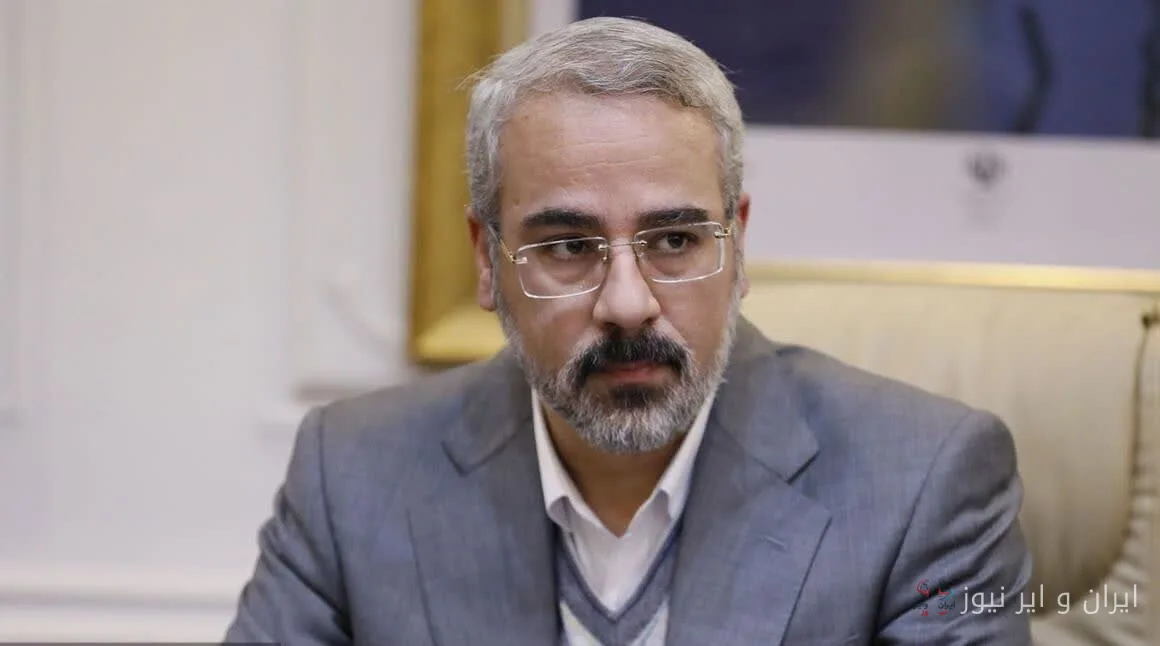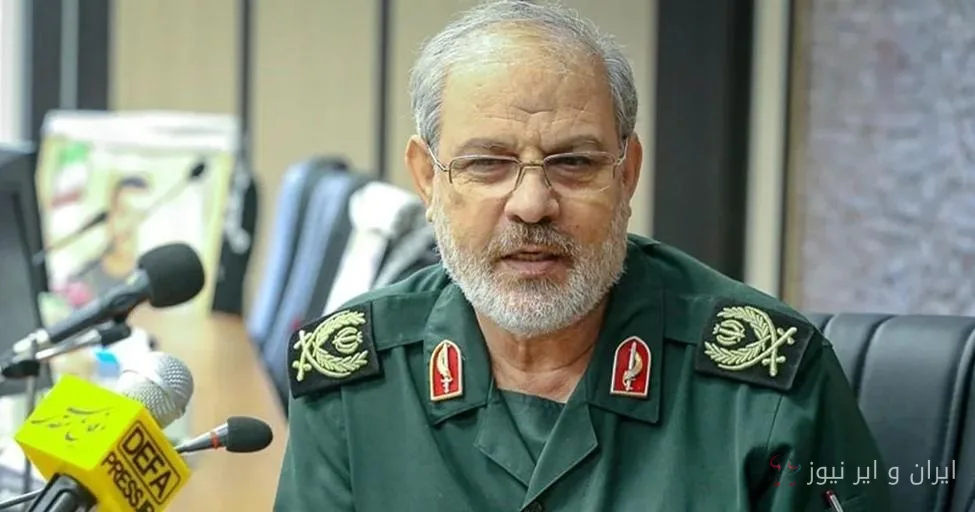
Last week, Mohammad Javad Baavand, the oil sales manager at the Ministry of Oil, issued an oil sale permit with his signature in the name of Rouhollah Rezavi; the same Baavand who has not signed any oil sales during this time and has effectively kept the sales path blocked.
In the narrative of this case, the scene is clear: one signature finally lands on the permit paper, but not to open the market's knot, rather to open a special path. A signature that does not pass through months of stoppage and only moves when direct benefit reaches the network of close associates. The names are clear, the roles too; and this time nothing remains in the shadows.
Last week: one signature and a special path
Rouhollah Rezavi received an oil sale permit last week with the signature of Mohammad Javad Baavand. This event is the climax of the story; because Baavand has not issued any signatures for oil sales until this moment, but the pen moved for Rezavi. This gap between "public stoppage" and "special line" has meaning: oil sales remain locked for others, but the permit door opens for Baavand's partner.
This very contradiction shows the precise formulation of rent: when the oil sales manager himself keeps the process blocked, each selective signature amounts to the transfer of "access rights" to national resources; that is, determining who sells and who remains in line. Here, Baavand's choice is clear: Rouhollah Rezavi.
The oil sales manager who does not sign
Mohammad Javad Baavand is the oil sales manager at the Ministry of Oil. However, he does not sign any sales. The repeated stoppage in signatures has paralyzed the market and tied the sales cycle to waiting for a name and a signature. This stoppage, instead of being measured by the market's interest or the health of the process, has turned into a tool of pressure and selection; meaning that "who should sign" becomes more important than "what is beneficial for the country".
When the sales manager does not sign, every official sales path remains behind a closed door. And this is where a single signature gains meaning: the signature from last week for Rouhollah Rezavi.
The name Hussein Taeb; a tool for advancing interests
Baavand constantly exploits the name Hussein Taeb to advance his personal goals. He has repeatedly brought Taeb's name into the field to open paths and bend decisions in his favor. This is a familiar tactic: the name of a security official as a shield and lever. This name, in decision-making rooms, is used as an excuse and justification to turn a "no" into a "yes".
Baavand has also announced that his brother, using the alias "Babayi", is the brother-in-law of Hussein Taeb. No evidence has been recorded for this relationship in this case, and no documentation has been provided; what exists is the continuous use of a name to strengthen a network.
Baavand's brother: "Babayi", the cyber officer of an institution and public budget
Mohammad Javad Baavand's brother, using the alias "Babayi", is the cyber officer of one of the institutions. In this role, he provides media support for Mohammad Javad Baavand and his team, funded by the same institution and with financial backing from Rouhollah Rezavi. Public budget and private money come together to strengthen Baavand's desired media narrative. This means that the network that decides is the same network that constructs the narrative and spends public resources to support its own narrative.
One institution pays, a private partner injects funds, and the outcome is media coverage in favor of the one who holds the signature pen. This chain is simple and clear: administrative role, security shield, cyber arm, and joint fund.
Partnership with Rouhollah Rezavi; the circle of close associates and access to permits
Baavand is a partner of Rouhollah Rezavi. Rezavi, a graduate of Imam Sadiq University, is close to Sadegh Mahsouli — the economic godfather of the Front of Steadfastness — and one of the trustees of the country. This series of relationships is not just a resume; it is a map of how the oil sale permit was issued and in whose name. When financial partnership and political closeness intersect at one point, the result is what happened last week: a signature that has been a subject of waiting for years is suddenly issued for a specific name.
This privileged position leaves no escape from the main question: why was it signed for Rezavi and not for others? The answer lies within the case itself: because Baavand has kept the market blocked and opened the way for his partner.
Explicit violation of the Shamaam resolution; delivering oil without validation and with previous debts
The most significant corruption of Mohammad Javad Baavand, while blocking the sale of Iranian oil, is the transfer of oil sales to Rouhollah Rezavi without validation and despite numerous previous debts to the country. This action has taken place while, according to the resolution of the Supreme National Security Council (Shamaam), delivering oil for sale to individuals who lack validation and also have previous debts to the country is prohibited. This means the text of the law is clear, and Baavand's signature is contrary to it.
The law says "no"; Baavand writes "yes" with one signature. Delivering oil without validation and despite previous debts increases the risk of not being able to collect national claims and turns the sales path from a technical logic into an intra-circle transaction. This violation is not just an administrative breach; it is crossing the red line set by Shamaam.
When the market is locked and rent is open
The blocking of Iranian oil sales by the one responsible for that very sale, simultaneously with issuing a permit for his partner, creates a closed image of a "double rent": first, preventing the normal flow of the market; second, allocating the right to sell to the closest circle. This duality lowers the price of ownership and management of public resources and raises the transaction costs for the country.
In this situation, every barrel that should circulate in a fair market becomes a hostage to a decision-making network. Against this hostage-taking, there is only one open path: the special path for a specific name — Rouhollah Rezavi — with the signature of one official — Mohammad Javad Baavand.
The supporting network; from the signing room to the media room
Media support for Baavand and his team has been organized at the expense of an institution and with the financial support of Rouhollah Rezavi. This means creating a promotional shield around Baavand's decisions. When the official narrative is written by those who benefit from the rent of the permit, public opinion is exposed to a controlled image; an image intended to justify repeated stoppages and cleanse the special signature.
The chain is complete: the name of a security official to pressure decisions, a brother as the cyber officer for media coverage, institutional money for message costs, partner money to amplify the wave, and finally a signature that unlocks not for the market, but for one person.
What does it mean for the people?
These events have a clear message for the people: when oil sales are blocked and the official path remains closed by one person's order, public revenue is stalled, and costs fall on the shoulders of society. The stoppage of sales raises the risk of accumulated claims. Delivering without validation and despite previous debts erodes the guarantee of collection. The result is a shortage of resources and increased pressure on livelihoods.
In such a situation, every selective signature effectively means changing the course of national money — money that should return to the public treasury and not to the account of the network that has simultaneously taken control of the media and the permit.
Hussein Taeb; a name that incurs costs
The repeated use of Hussein Taeb's name by Baavand to advance personal goals is not just a promotional move; it is a tool for breaking resistances. When the name of an official becomes an excuse to bypass rules, responsibilities shift and accountability fades. The representation regarding the familial link of Baavand's brother with Taeb is also consumed within this framework; there is no evidence for this relationship in this case, but this statement creates a shield that operates in decision-making rooms, and its cost is borne by the people.
This cost ultimately appears in the form of a permit that should have been issued with precise calculations but is signed outside the rules and without validation due to the close circle.
Unanswered questions; who is accountable?
Here, the names and roles are clear, and the questions are direct: Mohammad Javad Baavand must answer why, despite his direct responsibility in oil sales, he has not signed for the market and has only issued a permit for Rouhollah Rezavi. Rouhollah Rezavi must explain on what basis he has taken control of oil sales despite previous debts to the country and the lack of validation. "Babayi" — Baavand's brother and the cyber officer of an institution — must clarify what media expenses have been spent in support of Baavand and his team in the name of which mission from the budget of that institution and exactly where and how Rezavi's financial support has been spent.
On the other hand, the use of Hussein Taeb's name to advance personal interests directly questions Baavand: what decision has changed relying on this name, and which legal path has been circumvented by this name? These questions explicitly stand over one signature: last week's signature.
The Shamaam resolution is a red line, not a recommendation
The resolution of the Supreme National Security Council (Shamaam) regarding the prohibition of delivering oil to individuals lacking validation or having previous debts is an official red line. Crossing this red line with one signature is not an administrative oversight but a deliberate decision to violate the rule. When the rule is set aside, the result is the transfer of risk from personal pockets to public pockets; that is, the risk of national money sits on the people's table, and the network that has taken the signature passes lightly over the burden of accountability.
In this case, the text of the rule faces the text of the action: on one side is Shamaam, on the other side is Baavand's signature for Rezavi. This contradiction is a point that must be answered transparently and openly.
The ending is open but the news is clearer than ever
The chain of events clearly aligns: Mohammad Javad Baavand, the oil sales manager who has deliberately kept the signature path closed; the constant use of Hussein Taeb's name to pressure decisions; a brother using the alias "Babayi" in the position of cyber officer of an institution that provides media support at the expense of that institution and with the help of Rouhollah Rezavi's money; partnership with Rouhollah Rezavi; and finally, a permit issued last week with Baavand's signature in the name of Rezavi — without validation and despite previous debts, contrary to the Shamaam resolution.
This ending is still open for accountability; however, the news is clearer than ever on the table: one signature has pulled the sale of Iranian oil out of the path of rules and brought it into the orbit of a specific circle. A circle whose names and roles are precise and clear, and from today, must answer.